


Fall Heat Pump Maintenance: Get Your Coeur d’Alene or Spokane System Ready for Winter
If your heat pump has spent all summer keeping you cool, fall is when it switches jobs — and that switch is exactly when small problems turn into cold houses. Fall heat pump maintenance is the difference between a system that carries you through a North Idaho or Eastern Washington winter without drama and one that quits on the coldest night of the year, usually a Friday, usually right before a holiday.
Whether you’re in Coeur d’Alene, Spokane, or anywhere in between — Post Falls, Rathdrum, Liberty Lake, Mead, Otis Orchards — the same fall prep applies. Here’s what actually matters, what you can check yourself, and when it’s time to call someone.
Why Fall Heat Pump Maintenance Matters Here
Heat pumps work harder in our climate than they do almost anywhere else in the country. Once temperatures drop toward freezing, your system pulls heat from cold outdoor air and pushes it inside, and it does that non-stop for months. A unit that’s dirty, low on refrigerant, or has a sticking defrost cycle doesn’t just run less efficiently—it can ice up, short-cycle, or fail outright on the coldest days, which is exactly when you need it most and when service calls are hardest to book.
Fall maintenance also protects the investment you already made. A heat pump that’s serviced every fall typically lasts longer and costs less to run than one that only gets attention when something breaks.
Your Fall Heat Pump Maintenance Checklist
1. Change or clean the air filter
This is the single most common cause of poor heat pump performance, and it’s the easiest to fix. A clogged filter restricts airflow, forces the system to work harder, and can lead to icing on the coil. Check it monthly during heavy-use season; replace disposable filters or wash reusable ones before the weather turns.
2. Clear debris around the outdoor unit
Leaves, pine needles, and yard debris pile up fast in September and October. Keep at least 18–24 inches of clearance around the outdoor unit so air can flow freely. If you’re in a spot that gets heavy leaf drop or early snow, it’s worth checking again after the first hard wind.
3. Check refrigerant levels and coil condition
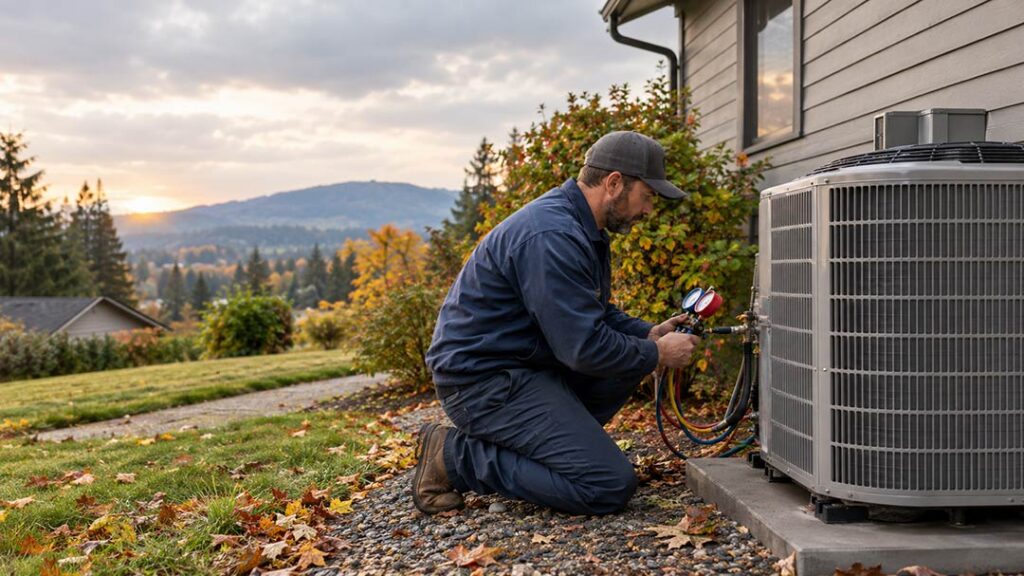
Low refrigerant is one of the top reasons heat pumps struggle in cold weather — the system simply can’t move enough heat with an undercharged line. This one isn’t a DIY check; it requires gauges and a licensed technician. If your system has felt “weaker” than usual, or you’ve noticed ice forming on the coil during shoulder-season use, get it checked before winter, not during it.
4. Test the defrost cycle and thermostat settings
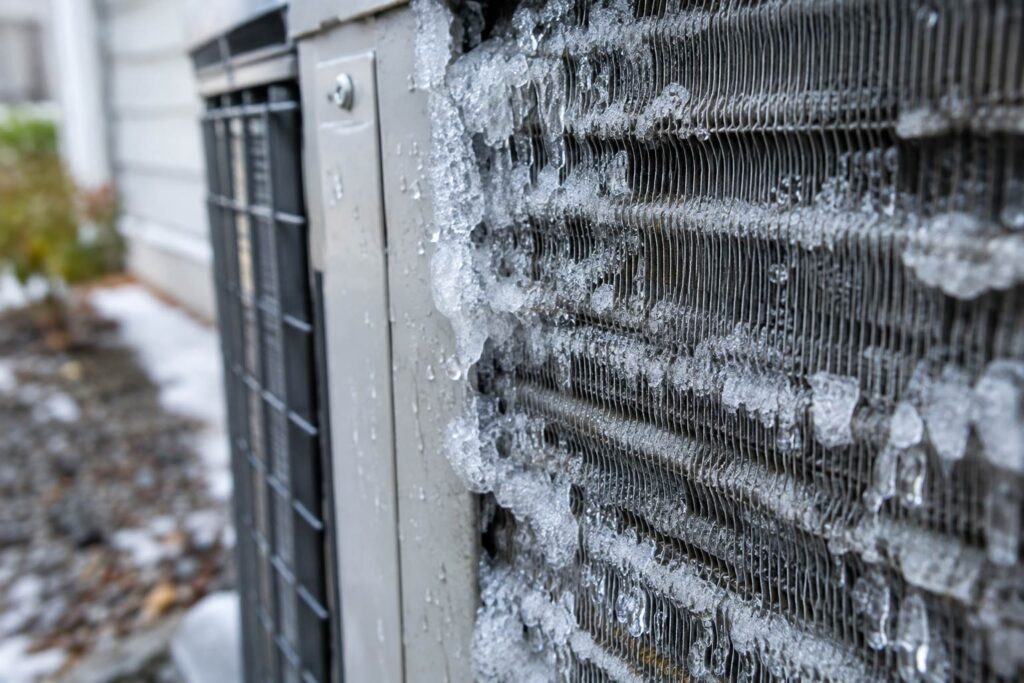
Heat pumps rely on a defrost cycle to melt frost that builds up on the outdoor coil in cold, humid conditions. If that cycle isn’t triggering correctly, ice accumulates and efficiency drops fast. A technician can verify that the defrost board and sensors are working. While you’re at it, confirm your thermostat’s schedule is set for fall/winter use and that any auxiliary or backup heat settings are configured correctly for the season.
5. Inspect electrical connections and the capacitor
Loose connections and a weak capacitor are behind a large share of “it just stopped working” service calls. These wear out gradually, so a fall inspection catches them before they cause a mid-winter breakdown.
DIY vs. Calling a Professional
Filter changes and clearing debris around the unit are safe, useful DIY tasks any homeowner can do. Refrigerant checks, electrical component testing, and defrost cycle diagnostics require training and equipment — attempting these yourself can void your warranty or damage the system. General rule: if it involves opening electrical panels or handling refrigerant, it’s a professional job.
Signs Your Heat Pump Needs Repair Before Winter Hits
Don’t wait for a full breakdown. Call for service if you notice:
- Weaker heating than usual, or the system running constantly without keeping up
- Ice building up on the outdoor unit outside of a normal defrost cycle
- Unusual noises — grinding, clicking, or a new rattle
- Short cycling (turning on and off frequently)
- Higher-than-normal utility bills with no change in usage
- Warm air that doesn’t feel as warm as it should on a cold day
Catching any of these in October is a routine repair. Catching them in January, when everyone else’s system is having the same problem, means a longer wait.
Don’t Forget: Rebates Before Year-End
If your heat pump is getting older, fall is also a good time to check whether it makes more sense to repair or replace it. Avista offers heat pump rebates for both Washington and Idaho customers that can meaningfully offset the cost of a new system, and rebate programs and federal tax credits are typically tied to the calendar year — worth checking before you’re deciding under pressure in the middle of a cold snap.
Heat pump installation options
Schedule Your Fall Tune-Up in Spokane or Coeur d’Alene
Thermal-King services heat pumps throughout our full coverage area — Spokane, Coeur d’Alene, Post Falls, Rathdrum, Liberty Lake, Mead, Otis Orchards, and the surrounding communities. Our preventive maintenance plan includes seasonal tune-ups like this one, so you won’t be stuck troubleshooting alone once the temperature drops.
How often should I schedule fall heat pump maintenance?
Once a year, ideally in September or October before the first hard freeze. If your heat pump also handles cooling duty in summer, a spring check is a good addition, but fall is the non-negotiable one for cold-climate homes.
Can I do fall heat pump maintenance myself?
You can safely change filters and clear debris around the outdoor unit yourself. Refrigerant checks, electrical testing, and defrost-cycle diagnostics require a licensed technician with the right equipment.
How much does a fall heat pump tune-up cost?
Cost varies by system size and condition, and it’s usually included with a preventive maintenance plan. A tune-up is almost always cheaper than an emergency repair, and far cheaper than replacing a heat pump that failed from neglect.
What temperature is too cold for a heat pump to work?
Modern cold-climate heat pumps are built to keep working well below freezing — many perform efficiently down to single digits or lower. Older or poorly maintained units struggle in genuinely cold weather, which is exactly why fall maintenance matters here.
Is it too late for fall maintenance if it’s already gotten cold?
No. A tune-up is worth scheduling any time before or during the heating season — it just gets harder to book quickly once the first real cold snap hits and everyone calls at once.